Frank Zappa – Zurich 1973 (Wetzikon)
After Montreux
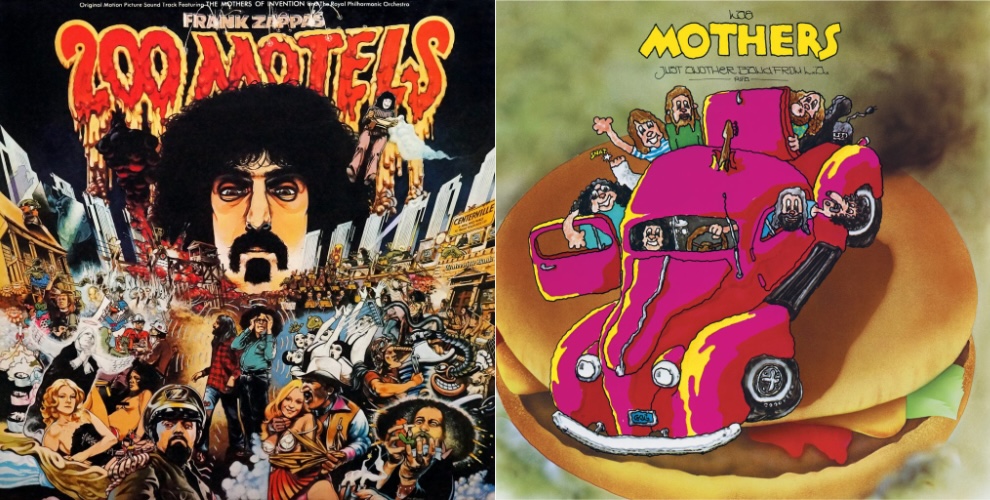
After the Montreux Casino fire, my interest in Frank Zappa’s music just kept growing. I started buying his new albums, beginning with 200 Motels, which came out rather quietly in October 1971, then Just Another Band from LA, a 1971 live recording very close in spirit to the Montreux concert. There was also a bootleg, Zappa & Mothers in Europe, recorded in Rotterdam in 1971, which was circulating pretty widely. Gradually, I also got most of his earlier records, which were starting to show up as imports.
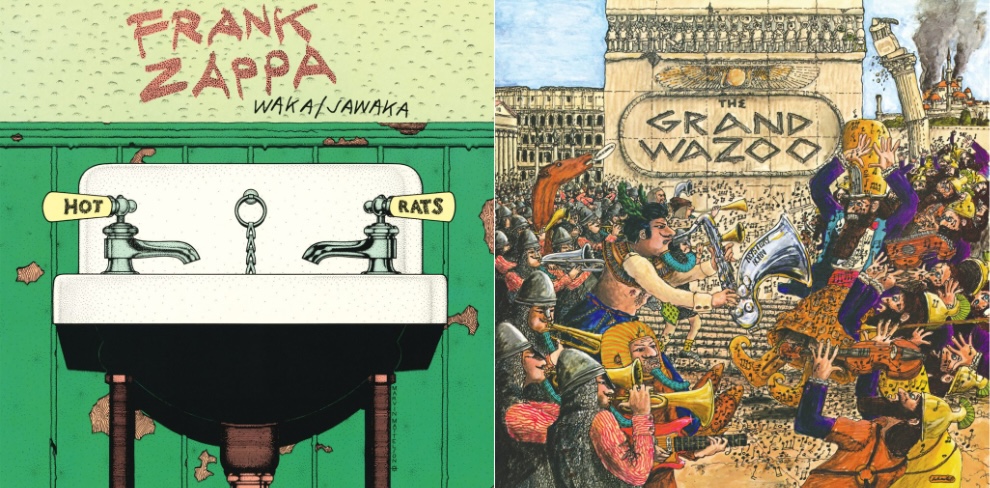
About a week after Montreux, a concert in London ended very badly for Zappa: he was violently thrown into the orchestra pit by a member of the audience. He had to stay home recovering in a wheelchair for a while, and he took the time to record two important albums that marked a new, slightly more jazz-oriented direction in his discography: Waka/Jawaka and The Grand Wazoo.
At that time, I was studying classical cello at the conservatory and teaching myself drums. I was open to all kinds of music, and while I kept following Zappa, I was also drawing inspiration from many other styles, from progressive rock to jazz. I was also participating in a choir, singing Mozart’s Requiem and other works.
I got exposed pretty early to challenging music; I remember being particularly interested in Pierre Henry’s musique concrète around age 12, and I was never afraid to listen to sounds that might seem strange to most people.
In 1972, one of my teachers, passionate about avant-garde classical music, organized concerts I would attend, including performances of Karlheinz Stockhausen and Pierre Boulez — without imagining that Boulez would collaborate with Zappa about twelve years later. This teacher had a copy of Zappa’s Uncle Meat that I had never heard before. I asked him if he liked it; he said it was too commercial. Knowing that Zappa himself labeled his music “No Commercial Potential,” that made me smile! It’s often like that in the music world: either not commercial enough, or too commercial!
Frank Zappa – Zurich 1973
The next time I got to see Frank Zappa live was on September 2, 1973, at the Mehrzweckhalle in Wetzikon, near Zurich, almost two years after Montreux.
It was a fairly large sports hall, a nice late-summer day, and a big crowd was waiting outside. While we were waiting, Frank and the Mothers were playing inside. It felt more like a rehearsal than a simple soundcheck.
The building was made of wood, and the sound was almost as loud outside. I had brought a cassette recorder, one of the first affordable portable stereo models. I really wanted to record the rehearsal, but the machine needed six big batteries, and I only had one set. So I decided to save them for the concert itself. I think they played King Kong during this rehearsal, a piece they wouldn’t repeat in the concert. The stage was wooden too, and it resonated a lot when Zappa started some pieces by stomping his boot on the floor.
There was a big crush at the entrance. We couldn’t get very close to the stage, but we were roughly halfway back, right in the center. It was still one of those concerts where everyone sat on the floor.
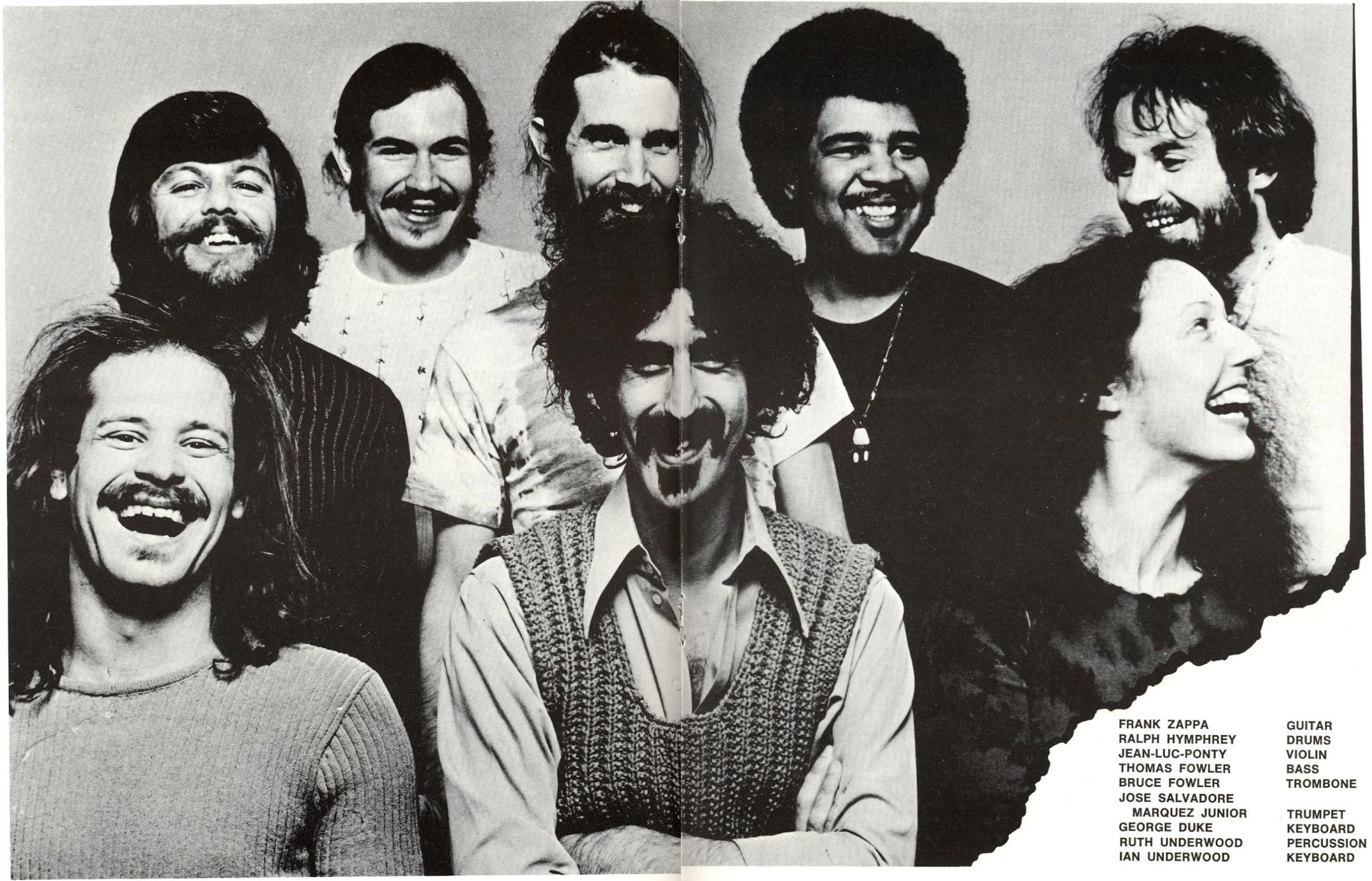
As for the lineup, I already knew George Duke, Jean-Luc Ponty, as well as Ian Underwood and his wife Ruth. I was half expecting to see Ainsley Dunbar on drums, but instead I discovered a new drummer, Ralph Humphrey. Among the new musicians were also the two brothers Bruce and Tom Fowler.
As a cellist myself, I was very impressed by Ponty’s intonation and phrasing, as well as by Ruth Underwood’s dexterity, and to this day Ralph Humphrey remains a drummer for whom I have the greatest respect — all the more so as I had the chance and pleasure to get to know him, and to appreciate him on a human level, eight years later, when I was studying with him in Los Angeles.
The concert was mostly instrumental, alternating composed pieces and long improvisations. They played tunes I really loved, such as Eric Dolphy Memorial Barbecue, Dog Breath, or Uncle Meat, but also many new compositions, like RDNZL, which would take years to appear on an album.
As for the songs, aside from Brown Shoes Don’t Make It, played as an encore, everything else was new: Montana, Cosmik Debris, Penguin in Bondage, and Inca Roads — four songs that would respectively appear on the next four albums.
The version of Inca Roads played that night was still far from the one later released on One Size Fits All. George Duke started by whistling while playing the piano, then began to sing. During that introduction, you could hear the audience laughing, because Zappa was pretending to do a striptease, swaying while letting his shirt slip off his bare shoulder.
Frank Zappa – Zurich 1973 – Inca Roads – audio
Beyond these memories, the main reason I wanted to record the concert was to keep a memory of the music, knowing that Zappa rarely just replayed the album versions live. Most of the compositions that night were new or unheard. As a musician, it allowed me to replay complex passages, understand certain phrases, hear new versions of old pieces, and discover works still in progress.
After the concert, we slept there. We had sleeping bags because I knew, from having been to that hall before, that some of the audience slept on the stands.
We had come by train, I think, but I mostly remember hitchhiking back the next day, in the fast car of a guy trying to impress us by driving like crazy.
Copyright © 2026 Alain Rieder - all rights reserved
Frank Zappa - Zurich 1973 - full concert in audio
Alain Rieder is a professional drummer from Geneva, Switzerland. He attended Frank Zappa’s concert in Montreux in 1971, which ended with the famous Casino fire. Zappa’s music has had a lasting influence on his artistic path, among many others, Alain being above all passionate about music in all its diversity. In 1981–1982, he studied at the Musicians Institute in Los Angeles with Ralph Humphrey, a former Zappa drummer, attended ten Zappa concerts between 1971 and 1988, and even briefly met him once backstage.
Alain Rieder is also the author of innovative drum methods.
Discover my drum methods