Rhythmic Twists in Paul McCartney’s “Salesman Saint”
In early April 2026, I spent a Beatles weekend in Liverpool with my son Jeremy. This trip was a birthday gift from him, and we had chosen to wait for spring to make it happen.
The trip had already been planned when I learned about the upcoming release of Paul McCartney’s new album, The Boys of Dungeon Lane, a work reflecting on his past in Liverpool.
I first met Jeremy in London, where he lives, and we drove the four hours to Liverpool together, listening to and singing Beatles songs in the car.
On the first night we went to the Cavern Club, where the Beatles played 292 times. At the time, they often played both lunchtime and evening shows, until the club became too small to hold the growing crowds.
We then took the Magical Mystery Tour, which passes through various places connected to their story: the houses they lived in (seen from the outside), as well as locations such as Penny Lane and Strawberry Field. We also visited the Beatles Museum before returning to the Cavern, as admission is included with the bus tour.
The Cavern had been destroyed, but it was rebuilt on the same site, apparently as faithfully as possible, even reusing some of the original bricks.
Bands perform there every day, playing their own interpretations of Beatles songs, but not exclusively. Fortunately, they aren’t dressed up as the Beatles, which I would have honestly hated.
But among the moments that moved me the most were the visits inside the childhood homes of John Lennon and Paul McCartney, now national museums open only to small groups.
Paul McCartney's Childhood Home
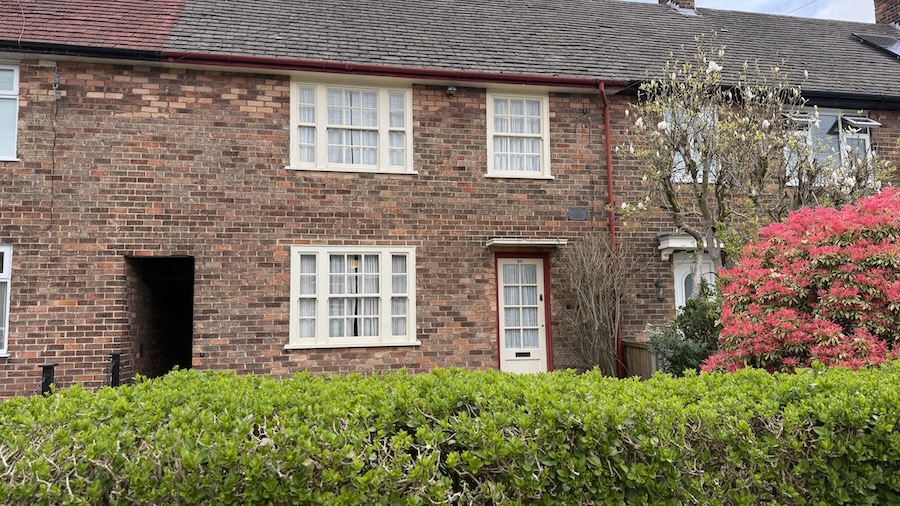
Inside, photography is not allowed, but while listening to one of the songs from the album, Salesman Saint, I find myself back in the living room I visited two months earlier.
Most of the furniture and objects are original period pieces, preserved by various members of the family.
The original piano is kept at Paul McCartney’s home, but the one displayed in the house is exactly the same model, by the same maker, and it is in this room that he composed When I’m Sixty-Four when he was only 14 years old.
Salesman Saint
Among the songs on the album, one in particular resonated with me after that visit. “Salesman Saint” is a tribute to Paul’s parents. This song really moves me because it evokes a difficult time in the house I visited.
It also contains a few interesting rhythmic subtleties that I invite you to discover further down the page.
The song is mostly in 12/8, with a section in 4/4.
It begins with a three-bar introduction played on acoustic guitar, with a trumpet melody entering from the second bar.
When the drums come in at the start of the first verse, the groove is not quite standard: it is mainly played on the snare drum, apparently with brushes, supported by a few bass drum notes.
To clarify the examples here, I use a simplified 12/8 groove which is closer to what's being played in the choruses.
Paul played most of the instruments on this album, so I believe he is also the drummer here.
Complete Song
Interlude – from 12/8 to 4/4
The following example illustrates the structure that begins at 1m28, after the first chorus: two measures in 12/8 with a trumpet melody, followed by six measures in 4/4, before returning to 12/8.
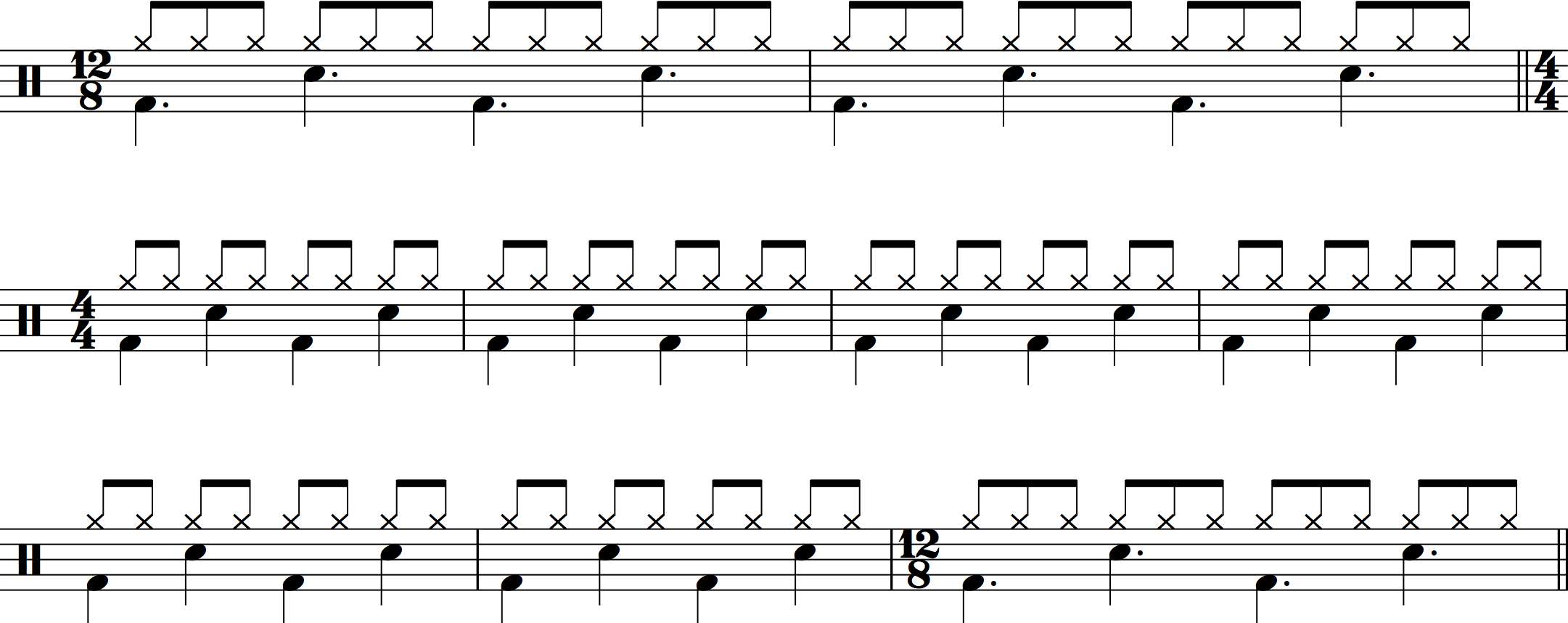
From 12/8 to 4/4 – First possibility
The song is melancholic, but this 4/4 section clearly conveys a sense of hope.
For musicians, it is essential to understand what happens when the time signature changes.
When the music shifts from 12/8 to 4/4, the approach used in this song is as follows:
In this song, the note values do not change: the eighth notes remain at the same speed, but the beat changes from the dotted quarter note to the quarter note, resulting in an increase in tempo.
Each measure is played twice:

From 12/8 to 4/4 – Second possibility
In other songs, another possibility is to change from 12/8 to 4/4 while keeping the pulse constant.
In that case, a metric modulation sign is used (dotted quarter note = quarter note), so the tempo of the dotted quarter notes becomes the tempo of the quarter notes.
Each measure is played twice:

Second verse – polyrhythm with brass
In the second verse, which starts at 1:55, the arrangement introduces brass phrases between the vocal lines to evoke the popular music of the years following the end of the Second World War.
What happens here is particularly interesting from a rhythmic standpoint. The brass section was recorded separately, and its underlying rhythmic feel, based on quarter notes and swung eighth notes, is superimposed on the 12/8 meter. It is aligned with a subdivision equivalent to dotted eighth notes in 12/8, creating a 2:3 polyrhythm against the three eighth notes that make up each beat of the 12/8.
What makes the polyrhythmic effect even more striking is that the dotted eighth-note pulse itself is never explicitly stated.
The only entertainment a piano and a radio
Hot tea and cigarettes was enough to keep them on the go
Another generation yearning to be free
Learning how to keep it together and raise a family
Coda – polyrhythm with brass
After the second chorus, in the coda (the ending of the piece), the brass returns in a more dominant way, and handclaps on beats 2 and 4 have been added, further reinforcing the effect.
The basic 12/8 feel remains in the background underneath the brass arrangement. The song could very well have ended with the brass arrangement alone; I imagine this option may have been considered, but it would have been slightly more conventional and commonplace.
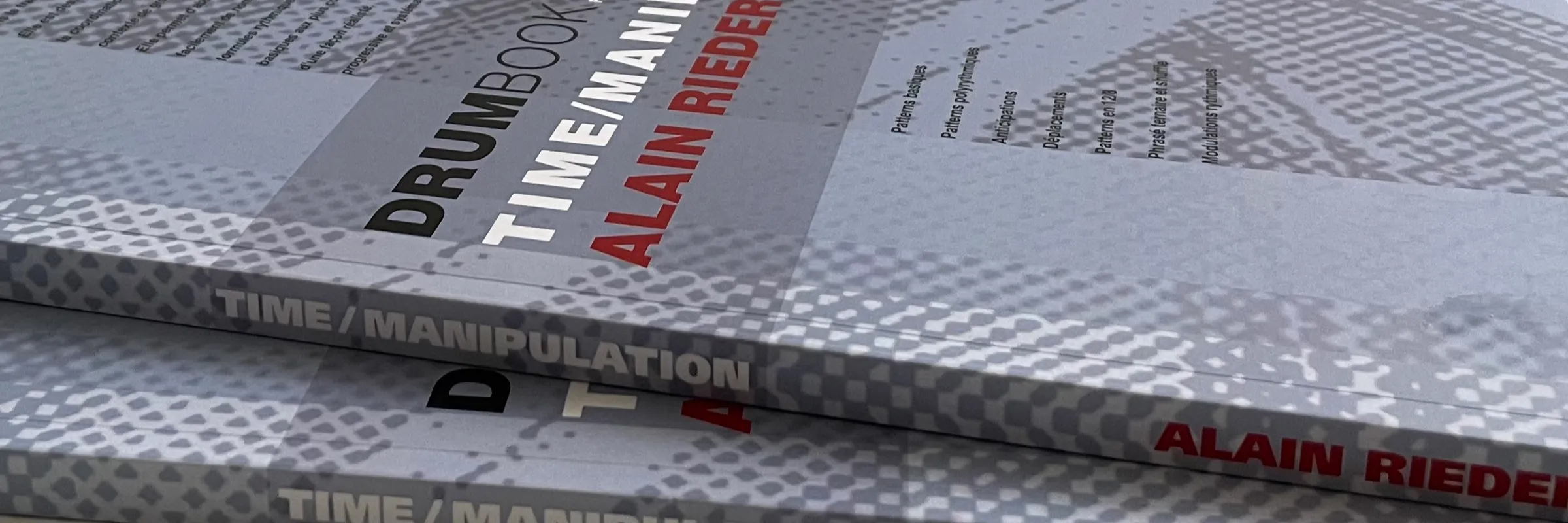
Explore These Ideas Further in Time Manipulation
When I was writing the first edition of my Time Manipulation method, I realised that slow 12/8 time feels, such as those often found in ballads or slow blues, are rarely covered in drum methods.
I therefore dedicated a section of the book to a solid introduction to this rhythmic language.
If one were to list all possible combinations of quarter notes, eighth notes, sixteenth notes, and rests in 12/8, as I did for the first section of the book in 4/4, the number of possibilities would be enormous, and I felt this would offer limited musical interest.
Instead, developing a page based on dotted eighth notes led me to create additional exercises in this style, including displacement concepts.
I am not aware of any other drum method covering this type of material, and I invite you to work on it in mine, starting from page 100.
Working on these rhythms will strengthen your sense of time and your musicality.
The following example is not at all what is played in the song, but it illustrates how this 2:3 polyrhythm in 12/8 can be interpreted on the drum set.
The following patterns, along with many others, can be found on page 101 of the method.
The two-measure pattern is played four times:

A Polyrhythmic Ostinato
The ostinato in the second measure of the following example is the last one on page 93 of my book Time Manipulation. It can be combined with the many 12/8 groove patterns included in the book.
It’s an effect I really enjoy, combining the feel of 12/8 with that of a half-time shuffle, here enhanced by ghost notes.
The two-measure pattern is played four times:

Copyright © Alain Rieder 2026 - all rights reserved
Discover my drum methods